Starting an online business in 2026 offers exciting opportunities for entrepreneurs and business owners. With the right idea, digital tools, and marketing strategy, you can build a business that reaches customers beyond geographical boundaries. However, success requires more than launching a website or creating social media accounts. In this guide, we'll walk you through the essential steps to start an online business, avoid common mistakes, and build a strong foundation for sustainable growth.
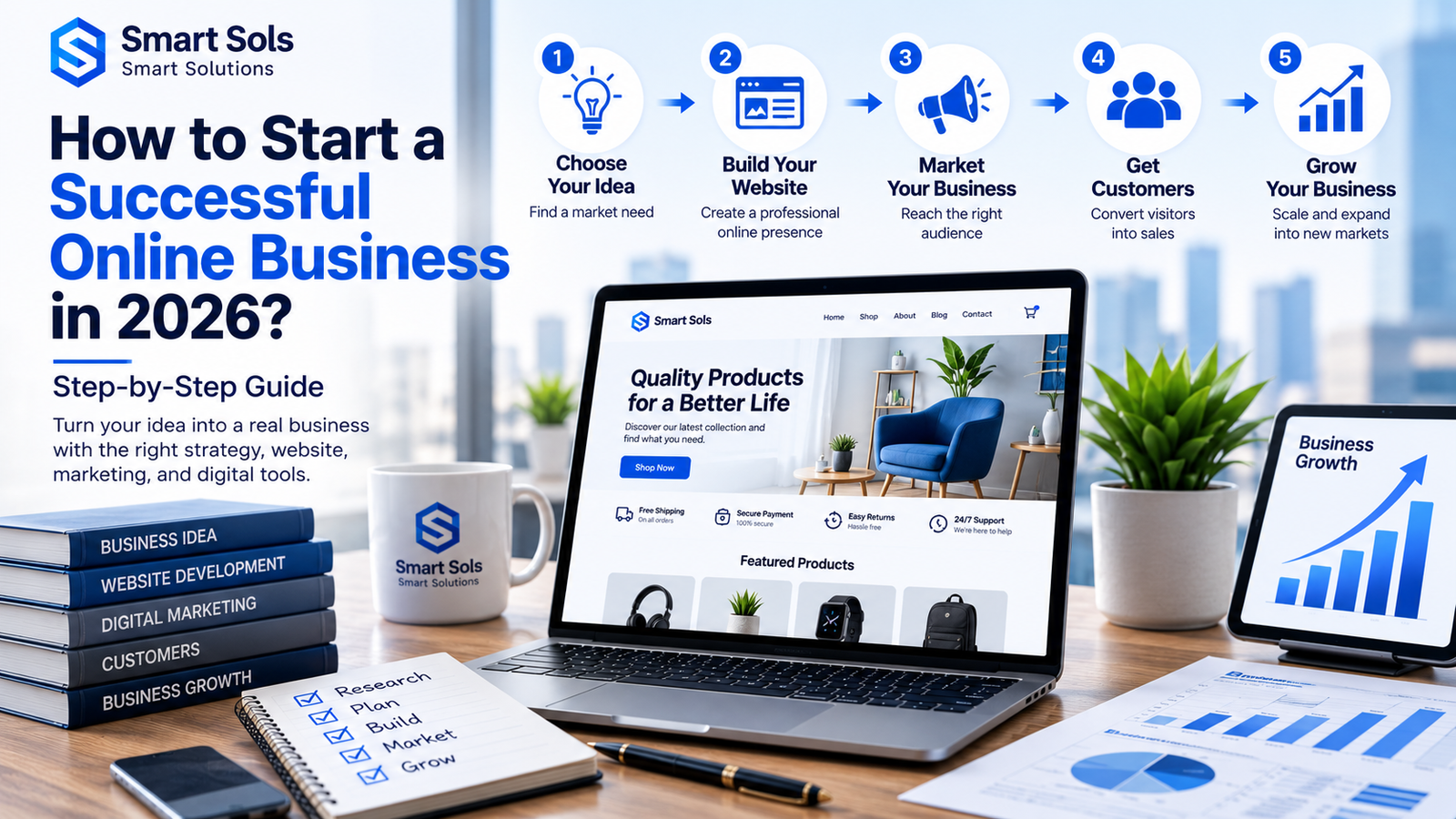
How to Start a Successful Online Business in 2026: Step-by-Step Guide
Starting an online business has become more accessible than ever. Entrepreneurs can reach customers, deliver services, sell products, and manage operations using digital platforms.
However, building a profitable online business requires careful planning, market research, and consistent execution.
Whether you want to launch an e-commerce store, sell professional services, or build a digital platform, this guide will help you understand the essential steps.
1. Choose the Right Online Business Idea
Every successful business begins with a problem worth solving.
Instead of choosing an idea simply because it is popular, focus on identifying real customer needs.
Some common online business models include:
- E-commerce stores selling physical products.
- Online service businesses.
- Digital product businesses.
- Subscription-based services.
- Online education and training.
- Booking and reservation platforms.
- Business-to-business digital services.
Before committing to an idea, consider whether customers have a genuine need for your product or service and whether they are willing to pay for it.
How to Validate Your Idea
Start by asking:
- What problem does my business solve?
- Who are my target customers?
- What alternatives are customers currently using?
- Why would customers choose my solution?
- Can the business generate enough revenue to cover its costs?
You can validate demand through customer interviews, competitor research, landing pages, and small marketing experiments.
2. Research Your Market and Competitors
Market research helps you understand customer expectations and identify opportunities.
Analyze businesses that already offer similar products or services.
Focus on:
- Their target audience.
- Pricing models.
- Website experience.
- Product or service offerings.
- Customer reviews.
- Marketing channels.
- Strengths and weaknesses.
The goal is not to copy competitors but to identify opportunities to offer better value.
Identify Your Unique Selling Proposition
Your Unique Selling Proposition (USP) explains why customers should choose your business.
It might be based on convenience, specialization, service quality, customer support, or a distinctive product.
A clear USP makes your marketing messages more compelling.
3. Define Your Target Audience
Trying to sell to everyone often makes marketing less effective.
Define your ideal customers based on their needs, buying behavior, budget, and location.
For example, a business selling digital services might target startup founders, small business owners, or established companies looking to improve operations.
Create a simple customer profile that answers:
- Who is the customer?
- What challenges do they face?
- Where do they search for solutions?
- What influences their purchasing decisions?
- What concerns might stop them from buying?
Understanding your audience will guide your website design, messaging, pricing, and advertising strategy.
4. Build a Professional Business Website
Your website is one of the most important digital assets your business can own.
Unlike social media accounts, a website gives you greater control over your branding, content, customer experience, and lead generation process.
A professional business website should include:
- A clear homepage.
- Product or service pages.
- An About Us page.
- Contact information.
- Mobile-responsive design.
- Fast loading performance.
- Secure connections using HTTPS.
- Clear calls-to-action.
- Search engine optimization fundamentals.
Depending on your business model, you may also need online payments, booking functionality, customer accounts, or an administrative dashboard.
Website or Mobile App: Which Should You Start With?
For many new businesses, a responsive website is a practical starting point because customers can access it without installing an application.
A mobile app may become valuable when your business needs frequent customer interactions, push notifications, device-specific features, or a more personalized experience.
Choose based on actual customer requirements rather than trends alone.
5. Develop a Strong Brand Identity
Your brand is more than a logo.
It represents how customers recognize and perceive your business.
Important branding elements include:
- Business name.
- Logo.
- Brand colors.
- Typography.
- Tone of voice.
- Visual consistency.
- Clear brand positioning.
A consistent identity across your website, social media, advertisements, and customer communications helps customers recognize your business.
6. Choose the Right Business Tools
Running an online business involves more than selling products or services.
You may need tools for:
- Customer relationship management.
- Invoicing and accounting.
- Email communication.
- Payment processing.
- Inventory management.
- Project management.
- Analytics and reporting.
- Customer support.
Start with the tools your business genuinely needs.
As your operations grow, you can integrate additional systems or develop custom solutions for requirements that existing tools cannot adequately support.
7. Create a Digital Marketing Strategy
Launching a website does not automatically bring customers.
You need a marketing strategy that helps your target audience discover your business.
Search Engine Optimization (SEO)
SEO helps search engines understand your website and can improve your visibility for relevant searches.
Focus on:
- Useful and original content.
- Relevant search keywords.
- Clear page structures.
- Technical website performance.
- Internal linking.
- Descriptive titles and meta descriptions.
SEO generally requires ongoing effort, and results are not guaranteed.
Social Media Marketing
Choose platforms where your customers are active.
Depending on your audience, these might include LinkedIn, Instagram, Facebook, TikTok, or other channels.
Publish content that educates, answers questions, demonstrates expertise, and builds trust.
Paid Advertising
Paid advertising can help you reach targeted audiences and test business offers.
Platforms may include Google Ads and Meta Ads.
Begin with a controlled budget, measure qualified inquiries and sales, and optimize campaigns based on results.
Email Marketing
Email marketing can help nurture relationships with customers who have agreed to receive communications.
Use it to share useful information, relevant offers, product updates, and educational content.
8. Focus on Customer Experience
Attracting a customer is only one part of business success.
Providing a positive experience can encourage repeat purchases, recommendations, and long-term relationships.
Important practices include:
- Responding promptly to inquiries.
- Explaining pricing and policies clearly.
- Delivering products or services as promised.
- Providing accessible customer support.
- Collecting feedback.
- Addressing complaints professionally.
Your customer experience should be consistent across every interaction.
9. Track Business Performance
Successful businesses measure performance rather than relying entirely on assumptions.
Important metrics may include:
Website Traffic: The number of visitors reaching your website.
Conversion Rate: The percentage of visitors who complete a desired action.
Customer Acquisition Cost (CAC): The average cost of acquiring a new customer.
Average Order Value (AOV): The average revenue generated per order.
Customer Retention Rate: The percentage of customers who continue purchasing or using your services over time.
Profit Margin: The percentage of revenue remaining after relevant costs.
Not every metric will apply equally to every business model.
Choose the indicators that best reflect your business goals.
10. Manage Your Budget Carefully
Many new businesses underestimate operating expenses.
Your budget may need to cover:
- Website development.
- Domain and hosting.
- Branding and content.
- Marketing and advertising.
- Payment processing fees.
- Software subscriptions.
- Customer support.
- Maintenance.
- Legal and accounting requirements.
Estimate your startup costs, expected monthly expenses, and potential revenue.
Maintain enough financial flexibility to test your business model before committing to major expansion.
11. Automate Repetitive Business Processes
As your business grows, manual tasks can consume valuable time.
Automation may help with:
- Customer inquiry routing.
- Appointment confirmations.
- Invoice generation.
- Order notifications.
- Lead follow-ups.
- Internal task assignments.
- Reporting.
Begin with repetitive processes that are well understood and have clear rules.
Automation should improve reliability and efficiency without compromising customer experience.
12. Scale Your Business Gradually
Growth should be based on evidence that your business model works.
Before expanding, evaluate whether:
- Customers consistently value your offering.
- Your acquisition channels are sustainable.
- Your operations can handle additional demand.
- Your financial performance supports investment.
- Your customer service remains reliable.
Once these foundations are in place, you can explore new products, markets, digital channels, or technologies.
Common Mistakes to Avoid When Starting an Online Business
New entrepreneurs frequently make avoidable mistakes, including:
- Launching without validating demand.
- Trying to target every customer segment.
- Spending too much before testing the business model.
- Building unnecessary website or app features.
- Neglecting mobile users.
- Depending entirely on paid advertising.
- Ignoring customer feedback.
- Failing to measure profitability.
- Underestimating ongoing operating costs.
Avoiding these mistakes can help reduce unnecessary expenses and improve your chances of building a sustainable business.
Conclusion
Starting a successful online business in 2026 requires a combination of market understanding, strategic planning, professional digital infrastructure, effective marketing, and continuous improvement.
You do not need to build everything at once.
Start with a clear customer problem, validate your idea, launch a focused digital presence, measure performance, and expand based on real results.
Technology is most valuable when it supports a clear business goal.
Ready to Launch Your Online Business?
At Smart Sols, we help businesses explore digital solutions tailored to their goals, including professional websites, mobile applications, e-commerce platforms, and custom software.
Whether you're starting a new business or improving an existing one, the right digital foundation can help you move forward with confidence.
Website: https://smartsols.net
Contact Smart Sols to discuss your project requirements and explore the right digital solution for your business.